

How I Scaled a Business Consultant Framework Across 60+ Products
The Business Consultant Framework I designed at Master Team to standardize delivery across a 60+ product enterprise portfolio spanning healthcare, government, and finance.
By Khalil Abu Mushref · ·
During my time as a Senior IT Business Consultant at Master Team, one of my most impactful initiatives was designing and institutionalizing a comprehensive Business Consultant Framework. The framework supported more consistent consulting delivery across a portfolio of over 60 enterprise software products in the healthcare, government, and finance sectors.
The Challenge: Inconsistent Delivery and Lack of Standardization
When I joined Master Team, I observed that while our consultants were incredibly talented, each had a unique approach to client engagements. This led to inconsistencies in the quality and structure of our deliverables, making it difficult to onboard new team members and ensure a uniform standard of excellence. As we took on more complex, cross-entity system implementations, the need for a unified methodology became critical.
The Solution: A Four-Pillar Framework
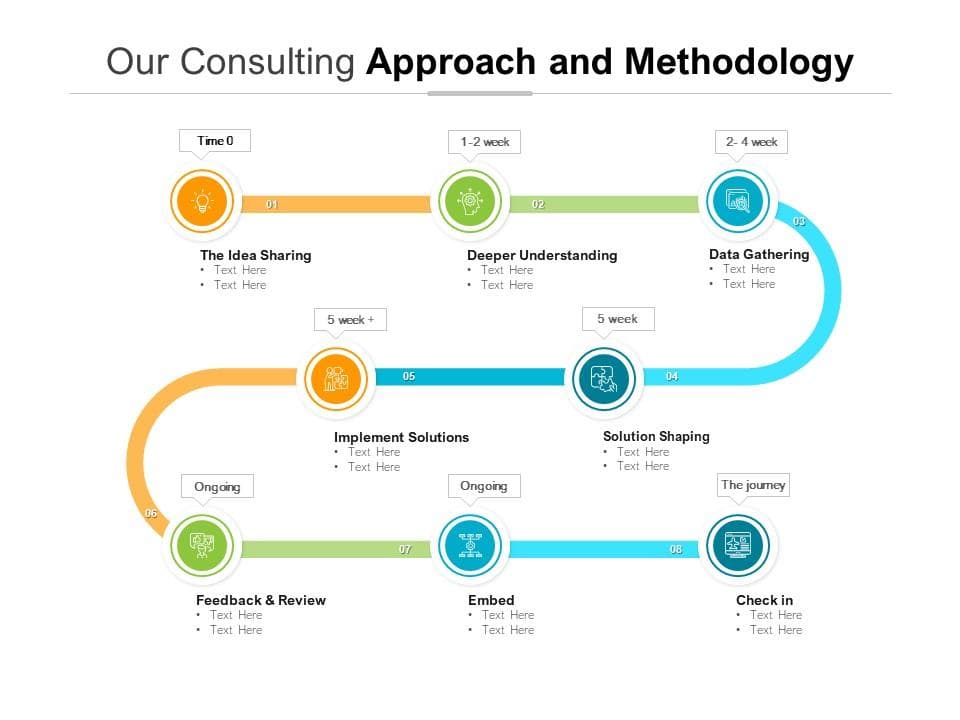
I developed a framework built on four key pillars, designed to guide consultants through every stage of an engagement, from initial discovery to final delivery and handover.
1. Structured Discovery & Analysis: The first pillar focused on standardizing the requirements gathering and analysis phase. We created a set of templates and checklists for stakeholder interviews, workshops, and documentation. This ensured that we captured all critical business needs, technical constraints, and policy requirements in a consistent format.
2. Agile-Driven Solution Design: The second pillar integrated agile principles into our solution design process. We moved away from monolithic design documents towards iterative prototyping and frequent feedback loops. This allowed us to validate our assumptions early and often, ensuring that the final solution was perfectly aligned with the client's evolving needs.
3. Governance-Ready Deliverables: The third pillar addressed the need for high-quality, board-ready documentation. We developed standardized templates for business requirements documents (BRDs), system architecture diagrams, and project roadmaps. This not only improved the clarity and professionalism of our deliverables but also streamlined the approval process with senior stakeholders.
4. Continuous Improvement & Knowledge Sharing: The final pillar was focused on creating a culture of continuous improvement. We established a central knowledge base to store best practices, lessons learned, and reusable assets from each engagement. We also implemented a peer-review process to ensure that every deliverable met our high standards of quality.
The Impact: Scalability, Consistency, and Excellence
The framework gave the consulting team a shared operating model. By standardizing our delivery process, we were able to:
- reduce avoidable rework through clearer templates, reviews, and handoffs;
- deliver more consistent, governance-ready outputs across product teams; and
- give new consultants a structured methodology and reusable knowledge base.
Key Takeaways
- A shared methodology beats individual brilliance: standardizing delivery is what let us support a portfolio of more than 60 enterprise products in healthcare, government, and finance.
- The framework rests on four pillars: structured discovery, agile-driven solution design, governance-ready deliverables, and continuous improvement.
- Standardization reduced avoidable rework and made deliverables more consistent.
- A clear, structured methodology made onboarding and knowledge transfer more repeatable.
This framework not only transformed our consulting practice at Master Team but also provided me with invaluable insights into the power of structured methodologies to drive scalability and excellence in the fast-paced world of enterprise technology.