

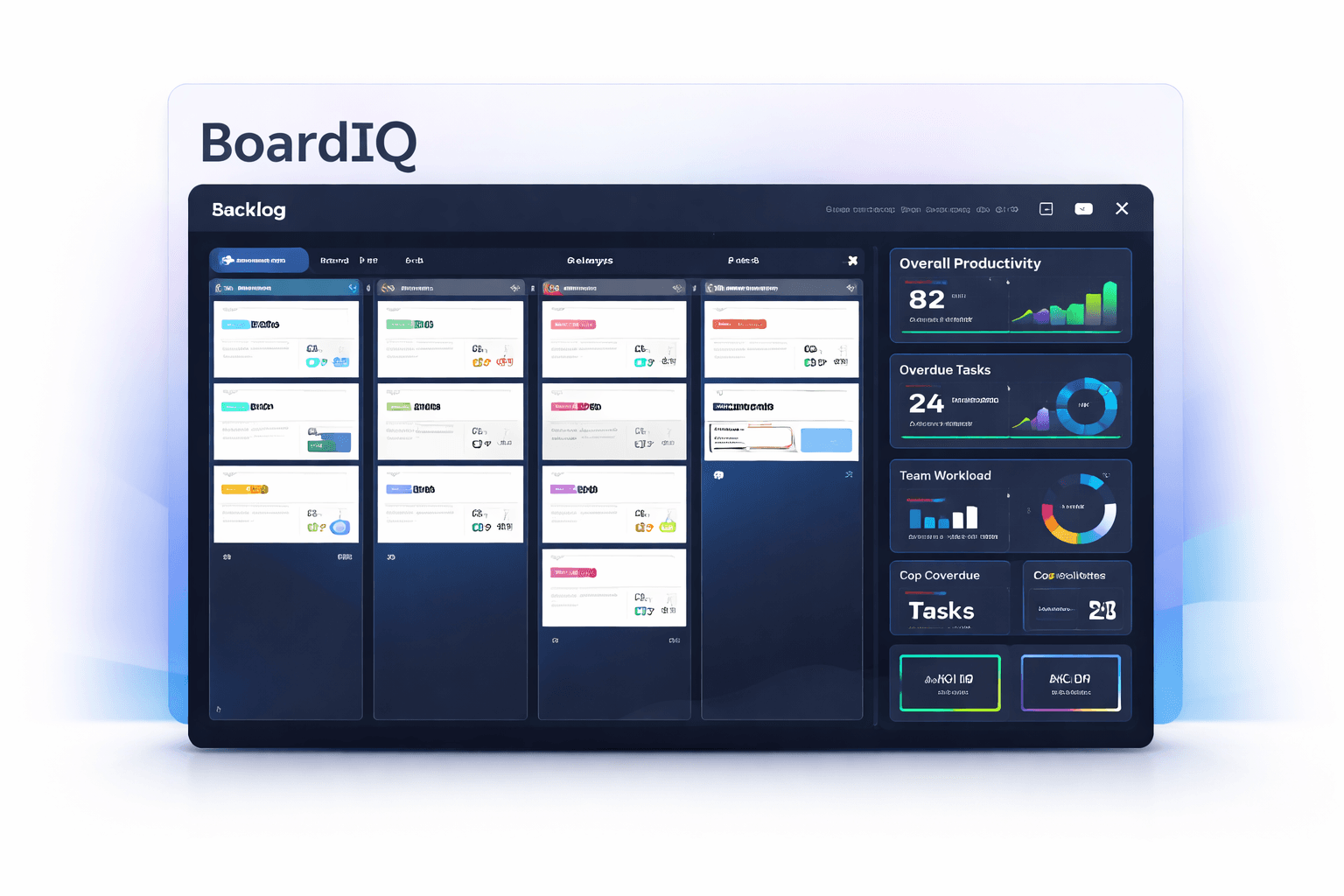
BoardIQ: An Executive Decision Platform for PMO Governance
BoardIQ brings PMO governance, payment intelligence, and document automation into one executive workspace for planning, vendor decisions, and board communication.
By Khalil Abu Mushref · ·
Executives rarely need one more dashboard. They need a reliable way to connect three decisions that often live in separate systems: are we delivering the plan, should we release this vendor payment, and what does the board need to know?
I built BoardIQ around that operating problem. Its current product direction is an executive decision layer for the IQ ecosystem, bringing PMO governance, payment intelligence, and document automation into one paper-clean workspace.
Run the plan. Pay the vendor. Brief the board.
BoardIQ is decision-support software. It organizes evidence and workflow; it does not replace the accountable executive, finance, procurement, legal, or governance review required by an organization.
Why Executive Decisions Fragment
Programme information tends to split along organizational lines:
- PMO teams track plans, milestones, dependencies, and risks.
- Finance and procurement teams review invoices, evidence, and payment status.
- Leadership teams prepare decisions, papers, and board communications.
Each function may be well managed on its own, yet the executive decision still requires someone to reconcile multiple versions of the truth. The delay usually appears in the handoff: a milestone status without its commercial implication, a payment request without delivery evidence, or a board paper assembled from stale material.
BoardIQ treats those handoffs as one product workflow rather than three reporting exercises.
The Three Decision Layers
Run the plan
The PMO governance layer is designed to connect objectives, initiatives, milestones, risks, dependencies, and accountable owners. The useful output is not a decorative status color; it is a traceable explanation of what changed, why it matters, who owns the response, and which decision is needed next.
Pay the vendor
Payment intelligence connects commercial requests to delivery evidence and the organization's approval policy. A reviewer should be able to see the invoice or request, the relevant milestone or acceptance evidence, the approval path, exceptions, and the decision history in one place.
The system can organize and summarize that evidence, while authorized people retain responsibility for validation and approval. This is especially important because a plausible AI-generated explanation is not proof that a contractual condition has been met.
Brief the board
Document automation turns governed source material into a reviewable first draft of an executive brief, decision paper, status narrative, or board pack. Source links and accountable review matter more than fluent prose: every important statement should be traceable, and generated language should be edited before formal use.
Product Principles
BoardIQ follows four principles:
- Evidence before narrative. The source record comes before the executive summary.
- Decision rights stay explicit. The product should show who may recommend, review, approve, or reject.
- AI drafts; accountable people decide. Generated summaries and documents always remain reviewable.
- One decision history. Plan changes, evidence, payment decisions, and executive communication should be connected rather than reconstructed later.
That design builds on lessons from enterprise BI, real-time PMO intelligence, and traceable approval workflows: decision quality depends on connected evidence, not the number of charts on screen.
Frequently Asked Questions
What is BoardIQ?
BoardIQ is an executive decision platform in the IQ ecosystem. It brings PMO governance, payment intelligence, and document automation into one workspace so leaders can connect delivery status, commercial evidence, and executive communication.
Does BoardIQ approve payments automatically?
No. BoardIQ can organize evidence, workflow, and decision history, but authorized reviewers remain responsible for validating contractual, financial, procurement, and governance requirements.
How does BoardIQ use AI?
AI can help summarize governed records and draft reviewable documents. It should not fabricate missing evidence or replace the people accountable for programme, payment, or board decisions.
Where can I explore BoardIQ?
BoardIQ is live at boardiq.khalil-am.com. The broader product portfolio is on the projects page, and professional enquiries can be sent through contact.