

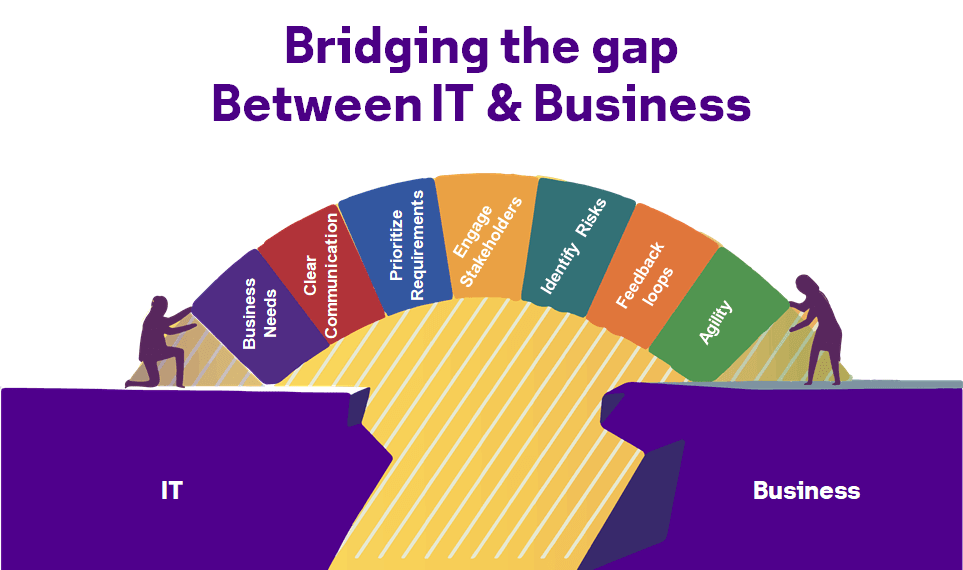
Bridging the Gap Between Business Strategy and Technical Execution
How I bridge business strategy and technical execution: translating needs into requirements, aligning stakeholders, and keeping agile delivery tied to strategy.
By Khalil Abu Mushref · ·
In the world of technology projects, the gap between what the business wants and what the development team builds can often feel like a chasm. As a business consultant, I've dedicated much of my career to standing in this gap, acting as a bridge to ensure that technical execution is always in perfect alignment with business strategy. It's a role that requires a unique blend of empathy, technical literacy, and strategic thinking.
The Art of Translation: From Business Needs to Technical Requirements
The most critical function of a business analyst is to act as a translator. Business stakeholders speak the language of KPIs, ROI, and market share. Development teams speak the language of APIs, databases, and microservices. A successful project depends on the ability to translate between these two worlds without losing anything in the process.
My approach to this is to focus on the "why" before the "what." Before I write a single user story, I work with stakeholders to deeply understand the underlying business problem they are trying to solve. Once I have a firm grasp of the strategic intent, I can then work with the development team to explore potential technical solutions. This ensures that we are not just building features, but building solutions that deliver real business value.
Stakeholder Management: Building Consensus and Managing Expectations
A project with misaligned stakeholders is a project doomed to fail. A key part of my role is to build consensus and manage expectations across all levels of the organization. This involves:
- Regular and transparent communication: Keeping everyone informed of our progress, challenges, and decisions.
- Active listening: Truly understanding the concerns and priorities of each stakeholder group.
- Facilitating compromise: Finding common ground and helping to negotiate trade-offs when conflicts arise.
One of the most effective tools I've found for this is the use of interactive prototypes. By giving stakeholders a tangible representation of the final product early in the process, we can gather feedback, validate assumptions, and ensure that everyone is on the same page before a single line of code is written.
Agile Delivery: Ensuring Strategy Informs Every Sprint
Agile methodologies have revolutionized how we build software, but they can also create a risk of losing sight of the big picture. It's easy to get caught up in the day-to-day rhythm of sprints and stand-ups and forget the overarching strategic goals of the project.
As a product owner, I see it as my responsibility to be the "guardian of the why." In every sprint planning meeting, I make sure to connect the user stories we are prioritizing back to the larger business objectives. This helps to keep the development team motivated and engaged, and ensures that we are always building the most valuable features first.
Key Takeaways
- Translation is the core job: Business speaks KPIs, ROI, and market share; development speaks APIs, databases, and microservices. Nothing can be lost in between.
- Start with the "why," not the "what": Understand the underlying business problem before writing a single user story.
- Prototypes build consensus: A tangible representation of the product lets stakeholders validate assumptions before any code is written.
- Be the "guardian of the why" in agile: Connect every sprint's user stories back to the larger business objectives.
Bridging the gap between business and tech is not always easy, but it is incredibly rewarding. By mastering the art of translation, building strong relationships with stakeholders, and keeping a relentless focus on the strategic "why," business analysts can ensure that their projects not only succeed but deliver a lasting competitive advantage.